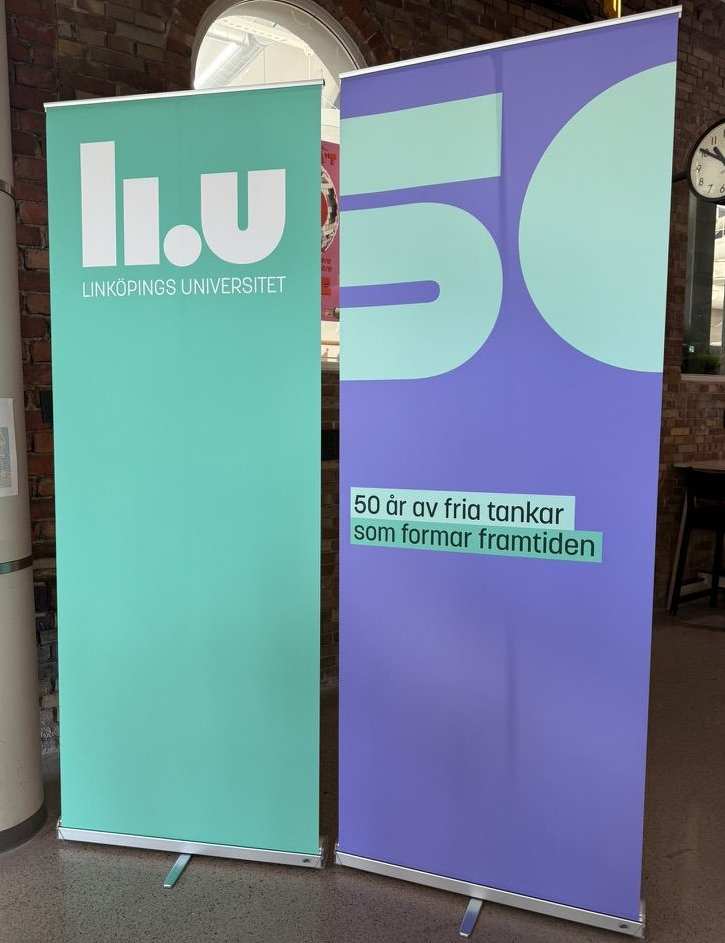
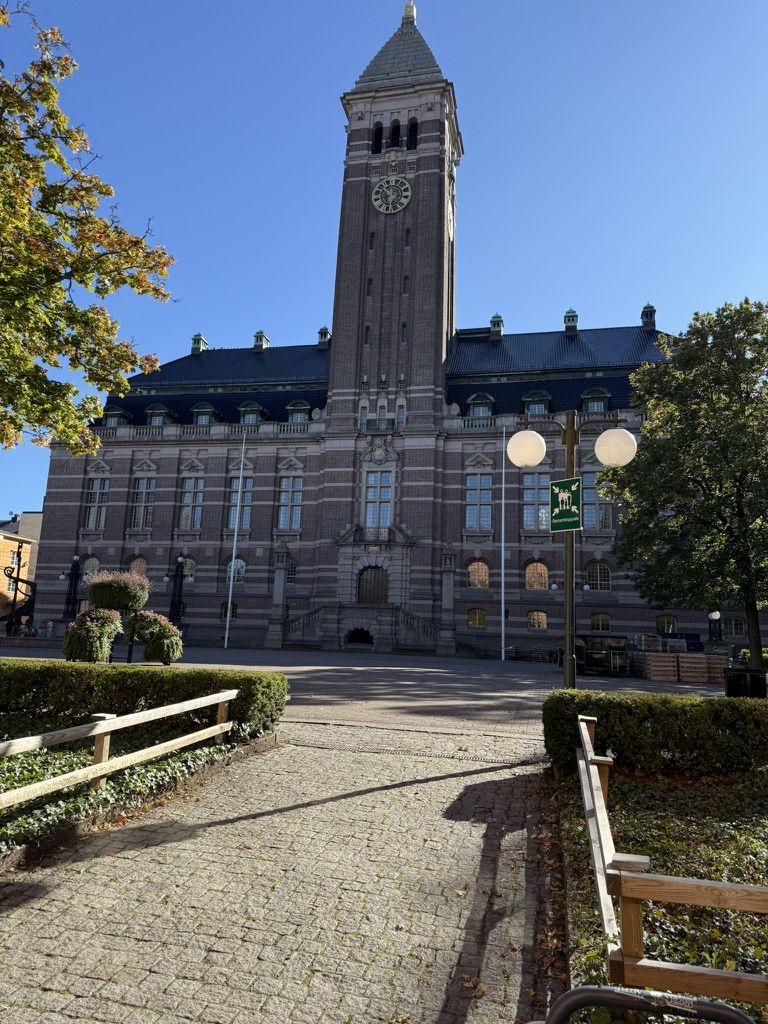
Campus Norrköping, Sweden – a picturesque setting for the conference. The conference itself was held at Linköping University’s campus in Norrköping, a charming city by the Motala River. Each morning, I walked along cobblestoned streets lined with autumn-coloured trees, grabbing a cup of tea (the rest of the Aussie team are coffee drinkers) and a kardemummabullene (cinnamon bun) to start the day. The air was crisp, the leaves were turning gold, and the atmosphere buzzed with anticipation. I felt immersed in a world of ideas and research from the get-go, ready to soak up as much as I could.
The conference opened with a powerful keynote by Dr. Joakim Caspersen from Norway. He presented a model of
discretionary decision-making that immediately struck a chord with me. Caspersen explained that our professional practice is essentially a never-ending series of decisions – big and small – shaped by a web of factors. Who we are as educators, the diverse needs of individual children and groups, our knowledge and values, the culture and routines of our organisation, outside influences like resources and policies – all these impact the choices we make on the fly. Listening to this, I found myself nodding along. In the daily hustle of an OSHC afternoon, how often do we juggle multiple needs and constraints at once? Caspersen put into words what that looks like beneath the surface.
He also spoke about how inclusion is one of our core values, yet the chaos of day-to-day practice can overshadow even our best intentions. We might strive to include every child fairly, but when you’re short-staffed or managing a challenging situation, those “minute-to-minute” decisions sometimes mean our inclusive ideals take a back seat. Caspersen shared examples from Norwegian childcare centres to illustrate this dilemma. In Norway, these centres have a universal mandate for social inclusion – much like our emphasis on equity in Australia – but even there, educators face rapid-fire dilemmas that can lead to unintended exclusion. This really resonated with me. It was validating (and a little poignant) to hear a researcher acknowledge that even with strong values and mandates, reality on the ground isn’t perfect. It reminded me that the challenges we face in OSHC – making fair decisions in the moment, balancing individual needs with the group – are a global experience.
Beyond the keynotes, there were dozens of presentations. One symposium comparing extended education in Sweden, Switzerland, and Australia was especially relevant to my work. I learned that in Sweden, almost all younger school children attend fritidshem (their version of OSHC) as a normal part of the day, whereas participation in OSHC is lower in Australia and Switzerland. This reflects different histories and policies – in Sweden, after-school care is a more integrated extension of the school day, while in Australia it’s often optional. Yet despite these differences, the researchers found common threads across all three countries. Everywhere, extended education programs provide children with space to pursue their interests, form friendships, and relax or play in a safe environment. In other words, OSHC services around the world share a mission: to offer children meaningful leisure time and learning beyond formal classes. Hearing this gave me a sense of solidarity. It affirmed that what we do in Australian OSHC is part of something much bigger – a global movement to support children’s growth in the hours after school.
During the sessions, I scribbled notes furiously. There were talks on everything from improving homework clubs to engaging community partners. In one presentation, a researcher from Germany discussed how children’s voices can actively shape after-school programs. In another, a colleague from Japan shared how cultural norms influence parent involvement in extended education. It was an eye-opening mix of ideas. Even when studies came from far-flung places, I kept thinking: How might this apply back home? Each new perspective challenged me to see OSHC through a broader lens.
And of course, true to Swedish tradition, between these intense sessions we had generous breaks for fika (coffee break). At first I thought, “How will we fit everything in with so many breaks?” – but I quickly realised the wisdom in it. Over coffee (or in my case tea) and pastries, I found myself in inspiring conversations with other researchers, each one more approachable and encouraging than I could have imagined. During casual chats over coffee and in the hallways, they eagerly shared their experiences and insights, offering generous advice about navigating my own PhD journey. Many took the time to ask about my research interests, listened thoughtfully, and suggested practical next steps or resources that could shape my future work. Their genuine interest and warmth made me feel like a valued part of the academic community, and the guidance I received has given me renewed confidence and clarity as I continue along my path in research.
One of the most exciting parts of the conference for me was the scheduled Leadership Focus Group session. This wasn’t a casual or impromptu discussion – it was a dedicated session for anyone interested in coming together to form a focus group, and leadership is an area that I’m deeply passionate about and the topic of my PhD.
Around a dozen of us attended, all keen to explore leadership in extended education spaces. The energy in the room was palpable as we shared our experiences, ideas, and aspirations for research and practice. Together, we agreed on a regular meeting cadence and set our first official session to take place before Christmas. It really felt like the start of something meaningful that could bridge our shared interests with real collaboration.
Importantly, this initiative is also part of an international collaboration under the WERA Task Force on Extended Education, which makes the work feel even more significant and connected to a wider global network.
Being part of this emerging focus group leaves me feeling optimistic about how we can collectively grow our understanding of leadership and generate insights that will benefit both theory and day-to-day practice in our field.
Each evening after the day’s formal program, I would take a walk back to the hotel with my fellow Australian attendees. These daily strolls through the twilight-lit streets became our time to decompress and reflect. Picture a group of people in warm coats, meandering along the river as the city skyline glows in the dusk. We’d recap the day’s learnings and compare notes on how different or similar things are back home. There was plenty of excited chatter about how we might adapt new approaches or try out different models we saw. Sometimes we’d simply share what moved us personally.
In a way, these walks were like mobile reflection sessions. By the time we’d reach the hotel lobby, I felt I had truly processed the day. Those informal nightly debriefs not only strengthened our friendships but also helped me internalise the insights on a deeper level.
On the final night, I was invited to join three senior Australian researchers and two of their Swedish colleagues for a small farewell dinner. One of the Swedish professors was actually retiring after this conference, which gave the gathering an extra layer of significance. We found a nice restaurant tucked away in the old town, and as we settled in, there was a sense that this was a special moment. Over hearty Swedish fare and a celebratory drink, our conversation flowed freely. We reminisced about the conference highlights and even delved into some wonderfully nerdy discussions about epistemology and ontology – the kind of deep philosophical chat about knowledge and reality in education that I never imagined I’d be part of at a dinner table!
As the night wore on, stories and laughter filled the air. The retiring professor shared memories from decades of work and her collated list of academic research relevant to extended education that she had collated for her students over the years.
Before we parted ways, the group told me they were heading off the next day to a writing retreat at a spa. I listened, fascinated, as they described a week of secluding themselves at the spa to turn their research data into academic output. The image of those brilliant minds collaborating made me smile – and think. It planted a seed of an idea for me. One day, I’d love to do something similar, perhaps a bit closer to home. I have this daydream of hitching up my caravan and parking by an Australian beach for a week, armed with my laptop, a stack of articles, and lots of tea. Just me, the ocean, and uninterrupted time to write my PhD thesis. It might be a while off yet, but after this conference it feels more achievable – even essential – to carve out that kind of dedicated writing time.
Flying back to Australia, I had plenty of hours to reflect on what this trip meant for me both personally and professionally. I returned home with a notebook full of ideas and a heart full of motivation. More than anything, the conference reinforced why I started Learn OSHC in the first place. We often talk about bridging theory and practice – making sure that what researchers discover in studies actually reaches educators on the ground, and vice versa. Being in Sweden, I saw that bridge in action: researchers genuinely wanted to learn from practitioners, and practitioners were hungry for research to guide us. It was a two-way street of learning. Now, back in my everyday environment, I’m excited to share these global insights with our OSHC community. Whether it’s rethinking our daily routines in light of Caspersen’s decision-making model, or simply remembering that we’re part of an international family all striving toward similar goals, I feel a renewed sense of purpose. My journey to this conference might have ended, but a new chapter of collaboration and growth has just begun.